Choosing High-Quality Ingredients for Perfect Choux Pastry
Selecting Fresh Eggs and Premium Butter
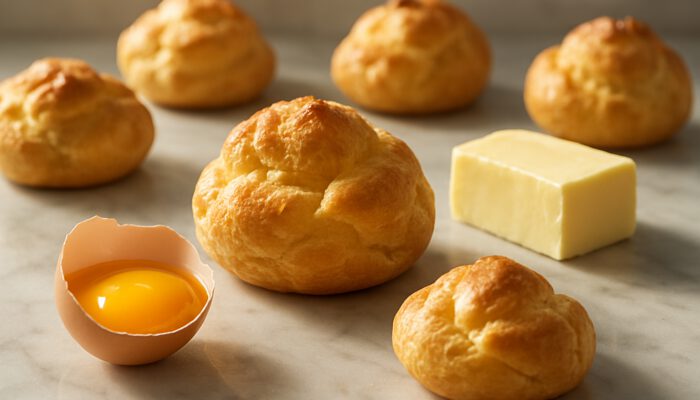
The success of your choux pastry begins with fresh eggs and high-quality butter. Eggs are crucial for providing moisture and structure, while butter adds richness and a flaky texture. Fresh ingredients are essential for achieving that light and airy rise that makes choux so appealing. Using outdated ingredients can result in a heavy and unappetising pastry, so always check for freshness before you start baking.
When it comes to butter, opt for unsalted varieties to maintain control over the salt levels in your pastry. The fat content is vital for achieving the right consistency, so select a reputable brand that you trust. Free-range or organic eggs tend to offer a richer flavour and better nutritional profile, which can significantly enhance the overall taste and texture of your pastries.
In any culinary environment, the quality of your ingredients can dramatically influence your baking outcomes. By prioritising fresh eggs and premium butter, you’ll set yourself up for success, crafting choux pastry that is not only delicious but also visually stunning.
Ensuring Accurate Flour Measurements for Optimal Results
Accurate flour measurements are essential for achieving the perfect dough consistency in choux pastry. Using too much flour can lead to a dry, crumbly texture, while too little can create a wet mixture that fails to maintain its shape. The best approach is to use a kitchen scale for precise measurements, ensuring that you use the correct amount of flour every time you bake.
Before measuring flour, aerate it by fluffing it with a spoon. This step prevents compaction, which can result in using more flour than intended. Level off the top of the measuring cup with a knife for an accurate measurement, avoiding any excess that could affect the dough’s consistency.
The type of flour is also important; plain flour is typically preferred for choux pastry, as it has the right protein content for achieving the desired elasticity. By measuring accurately, you can create a consistent dough that bakes evenly, resulting in perfectly puffed pastries.
Why Is High-Quality Produce Crucial for Baking?
High-quality produce is essential in baking, especially for choux pastry, where ingredients must work together to create a delicate texture and flavour. Sourcing reliable staples ensures consistent dough performance, minimising the risk of waste and disappointment. Ingredients such as flour, butter, and eggs should be fresh and of superior quality to achieve the best results.
Using top-tier produce enhances not only the flavour but also the texture of your pastries. For instance, quality flour can support better gluten formation, leading to a stable structure during baking. This stability is vital for achieving the characteristic hollow centre of well-made choux pastry.
Investing in high-quality ingredients pays off, as it results in more dependable outcomes in your baking efforts. By prioritising quality over cost, you can create pastries that stand out and satisfy even the most discerning palates.
How to Source Premium Vanilla and Spices
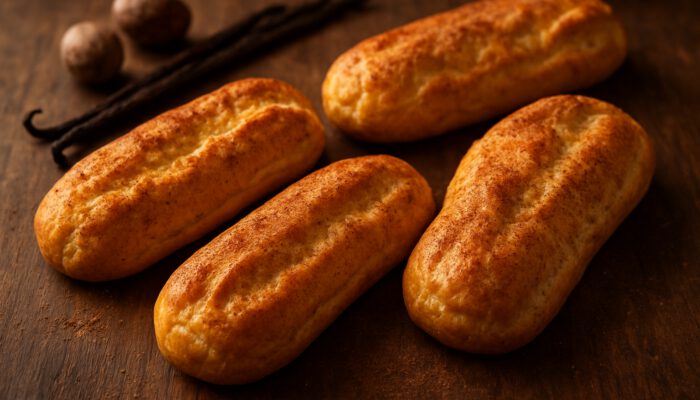
Incorporating genuine vanilla beans or high-quality extracts into your choux pastry can significantly enhance flavour. The depth and complexity that real vanilla adds cannot be replicated by synthetic options. When selecting vanilla, look for pure products without additives to ensure the best flavour.
Fresh spices also play a vital role in enhancing your pastry. For example, adding freshly grated nutmeg or a touch of cinnamon introduces a warm, inviting note that pairs beautifully with the sweetness of choux. These subtle flavour enhancements can elevate an ordinary pastry to extraordinary status, making it memorable for anyone who tries it.
While sourcing high-quality flavourings may take some effort, the payoff is substantial. Specialty stores or online retailers often offer premium selections that can transform your baking. By choosing top-quality vanilla and spices, your choux pastry will not only taste delicious but also possess a unique aroma, distinguishing it from others.
Choosing Superior Nuts and Dried Fruits for Enhanced Flavour
Incorporating high-quality nuts and dried fruits into your choux pastry can greatly enhance both texture and flavour. Nuts like almonds, hazelnuts, or pistachios provide a satisfying crunch and a rich, nutty flavour that complements the lightness of choux. Selecting fresh, premium nuts is essential for elevating your pastry.
Dried fruits, such as cranberries, apricots, or figs, can add natural sweetness and chewiness that pairs well with the airy texture of choux pastry. When choosing dried fruits, select those that are plump and moist instead of overly dry or hard, as this will improve the mouthfeel of your final product.
Utilising superior nuts and dried fruits not only enhances taste but also adds nutritional value to your pastries. This attention to ingredient quality can result in a more appealing product that satisfies customers and contributes to overall baking success. By focusing on top-notch ingredients, you create pastries that are not only delicious but also visually striking and health-conscious.
Essential Tools for Successful Pastry Preparation
Key Pans and Utensils for Choux Pastry
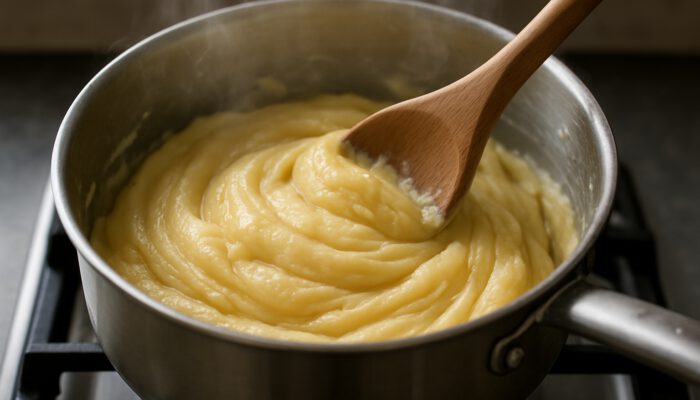
A sturdy saucepan and a wooden spoon are fundamental for crafting choux pastry. Choose a heavy-bottomed saucepan to distribute heat evenly and avoid hot spots that can cause uneven cooking. A wooden spoon is crucial for thoroughly mixing the ingredients and incorporating air into the dough as it cooks.
Selecting the appropriate saucepan size is important; a smaller pan can hinder effective stirring, while a larger one may result in excessive moisture evaporation, crucial for the pastry’s consistency. When heating the mixture, be patient. Gradually bringing the ingredients to a simmer allows for proper flour hydration, essential for the dough’s structure.
Having a reliable spatula on hand will also help scrape down the sides of the saucepan, ensuring that all flour is incorporated into the dough. With these basic tools, you can create a smooth, homogenous mixture ready for piping and baking, setting the stage for successful choux pastry.
Piping Bags and Tips for Perfect Pastry Shapes
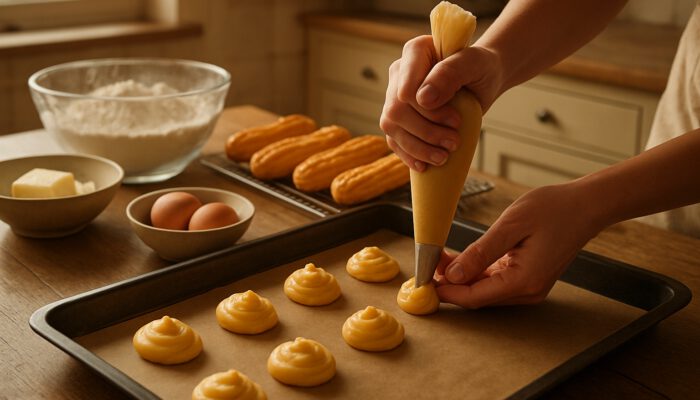
Piping bags and tips are vital for shaping your choux pastry into uniform sizes, ensuring even expansion during baking. A durable, reusable piping bag is ideal, as it can withstand the pressure needed to pipe the thick dough. Disposable bags can also work, but they may not offer the same level of control.
For tips, a large round tip is typically used for eclairs and cream puffs, while a star tip can create decorative edges. The choice of tip affects the final appearance of your pastries, so select one that aligns with your desired style. Practising piping on parchment paper can build your confidence before you tackle your final pastries.
Filling the piping bag properly is crucial; avoid overfilling, as this can hinder your control over the dough flow. Instead, fill the bag about two-thirds full, allowing room for easy handling. By effectively using piping bags and tips, you can create professional-looking pastries that rise evenly and showcase your baking skills.
Benefits of Using the Right Tools for Efficient Preparation
Utilising the appropriate tools can streamline your choux pastry preparation, making the process smoother and more efficient. Here are some key advantages of having the right equipment:
- Ensures consistent results with uniform shapes.
- Accelerates the mixing and piping process.
- Minimises the chance of mistakes during preparation.
- Enhances control over dough consistency and texture.
- Facilitates easy clean-up and maintenance.
- Improves overall baking experience and enjoyment.
By investing in quality tools, you position yourself for success, allowing you to focus on refining your choux pastry technique without unnecessary distractions.
Expert Tips for Crafting Classic Choux Pastry at Home
Understanding Dough Hydration for Optimal Results
Balancing moisture levels in choux pastry dough is essential for achieving the desired texture and structure. Experts highlight that proper hydration prevents cracking and ensures that pastries expand correctly in the oven. The liquid-to-flour ratio must be precise; too much water results in a soggy dough, while too little leads to dryness.
The secret to perfect hydration lies in the cooking process. As you heat the butter and water mixture, moisture evaporates, and the flour absorbs the liquid, forming a cohesive dough. Closely monitoring this process allows you to make necessary adjustments, ensuring that the dough remains pliable yet firm enough to hold its shape during piping.
Comprehending the science of dough hydration can significantly improve your baking results. Mastering this aspect enables you to create choux pastry with the signature hollow centre and crisp exterior that bakers strive for, elevating your homemade pastries to a professional level.
Practising Temperature Control for Smooth Batter
Maintaining precise temperature during the cooking process is crucial for creating a silky batter suitable for choux pastry. Experts recommend closely monitoring the heat to avoid lumps, which can compromise the final texture. Cooking the mixture over medium heat allows for gradual moisture evaporation while ensuring that the flour cooks properly.
Utilising a thermometer can help maintain the right temperature, particularly when melting butter and bringing the mixture to a boil. Once the batter forms, slightly cooling it before adding eggs is essential to prevent premature cooking, ensuring a smooth and homogenous mixture.
Real-world examples from successful bakers underscore the importance of temperature control. Many seasoned cooks note that even minor heat adjustments can yield significant differences in the final product. By practising precise temperature management, you can achieve consistent, high-quality choux pastry every time.
Learning from Successful Bakers’ Experiences
Numerous successful bakers have shared valuable insights regarding the intricacies of making choux pastry at home. For example, some have found that allowing the dough to rest for a short period before piping can lead to better expansion and a more uniform texture. This simple adjustment can greatly enhance the final presentation of your pastries.
Other bakers emphasise the importance of timing during baking. They often recommend keeping a close watch on pastries in the final minutes of baking to achieve the perfect golden colour. Small timing adjustments can lead to reliable rises and professional-quality results, even in a home kitchen.
These insights from experienced bakers serve as valuable lessons for anyone looking to improve their choux pastry skills. By learning from their successes and challenges, you can refine your technique and create pastries that rival those found in top patisseries.
Proven Strategies for Perfecting Classic Choux Pastry
Implementing Resting Periods for Optimal Dough
Resting the dough after mixing is a crucial step in making choux pastry. Allowing the mixture to sit for about 10 to 15 minutes helps firm up the paste, making it easier to handle and pipe. This resting period allows the flour to fully hydrate, contributing to a smoother texture and better structure once baked.
During this time, the dough can also cool slightly, which is advantageous before adding the eggs. If the dough is too hot, it can cook the eggs upon contact, leading to an uneven consistency. By taking the time to rest the dough, you set yourself up for success in achieving the desired puff and hollow centre in your pastries.
Incorporating this resting step into your routine can lead to more consistent results. This simple yet effective strategy can significantly improve the quality of your choux pastry, ensuring that each batch rises beautifully and holds its shape.
What Common Mistakes to Avoid During Mixing?
Avoiding common errors during the mixing process is key to achieving excellent results in choux pastry. One frequent mistake is overworking the dough, which can lead to a tough texture and poor expansion. Mix just until the ingredients are combined and the dough is smooth, steering clear of excessive stirring.
Another common issue is undercooking the paste, which can result in inadequate expansion. The dough should be cooked until it pulls away from the sides of the saucepan and forms a cohesive ball. Insufficient cooking can lead to unhydrated flour, resulting in dense and unappetising pastries.
By being aware of these common pitfalls, you can enhance your technique and achieve superior texture every time. Attention to detail during the mixing process is crucial for creating choux pastry that is light, airy, and perfectly puffed.
Effectively Testing Oven Readiness for Perfect Baking
Testing your oven’s readiness is crucial for achieving perfect choux pastry. Thoroughly preheating the oven ensures that pastries receive immediate heat upon entering, which is vital for proper lift and even colouring. An inadequately heated oven can result in undercooked pastries that lack the desired puff.
A simple method to test your oven’s temperature is to use an oven thermometer. This tool provides an accurate reading, allowing you to confirm that the temperature aligns with your recipe’s requirements. If your oven fluctuates in temperature, closely monitoring your pastries during baking helps avert common baking mishaps.
By ensuring your oven is properly preheated, you lay the groundwork for successful baking. This attention to detail can significantly affect the final outcome, resulting in perfectly risen pastries that are golden brown and delicious.
Selecting the Right Ingredients for Exceptional Results
Choosing premium ingredients is crucial for crafting outstanding choux pastry. High-quality butter, plain flour, and fresh eggs sourced locally guarantee that your choux paste develops ideal elasticity and flavour. The butter should be rich and creamy, while the flour should have a moderate protein content for a stable structure.
Farm-fresh eggs often have a richer flavour and contribute to better rising in your pastries. These carefully selected ingredients work together to create a dough that is both pliable and strong, providing a solid foundation for beautifully puffed and golden treats.
By prioritising quality in your ingredient selection, you can achieve results that rival those from any patisserie. This commitment to excellence not only enhances the flavour and texture of your choux pastry but also elevates the entire baking experience.
Mastering Piping Technique for Consistent Shapes
Perfecting the piping technique is essential for creating uniform shapes in your choux pastry. Maintaining a steady hand and consistent pressure while piping the mixture onto baking trays ensures even expansion during baking. This attention to detail prevents lopsided results and contributes to a professional presentation.
Begin by positioning the piping bag at a 90-degree angle to the baking tray, allowing the dough to flow smoothly. Practising piping on parchment paper helps build confidence and control before working on your final pastries. Consistent sizes not only enhance visual appeal but also ensure even baking.
By honing your piping technique, you can create pastries that are not only visually impressive but also taste exceptional. This skill is vital for any baker looking to elevate their choux pastry game and impress family and friends with their creations.
Troubleshooting Common Pastry Issues
How to Fix Collapsed Pastry Shells
Collapsed pastry shells can be a frustrating challenge when making choux pastry, but effective strategies can help address this issue. One common solution is to allow the pastries to cool slowly in the turned-off oven. This gradual cooling process helps retain volume and prevents deflation after removal from heat.
Baking time is another important factor; underbaking can lead to weak structures that collapse. Ensure that your pastries are fully cooked before taking them out of the oven to help maintain their shape. Using an oven thermometer can assist in verifying that the temperature remains accurate throughout the baking process.
By applying these troubleshooting techniques, you can significantly reduce the risk of collapsed pastry shells. This focus on detail ensures you achieve consistently impressive results, allowing you to enjoy beautifully puffed choux pastries every time you bake.
Adjusting Recipes for Humidity Variations
Humidity can have a considerable impact on your choux pastry, necessitating adjustments to maintain ideal dough thickness and baking behaviour. In humid conditions, flour can absorb moisture from the air, resulting in a wetter dough that may not hold its shape during baking. A slight increase in flour can help counteract this moisture.
When working in high humidity, consider adding an extra tablespoon or two of flour to your mixture. This adjustment will help achieve the right consistency and prevent stickiness. Conversely, in dry conditions, you may need to reduce the flour slightly to maintain proper hydration levels.
By being mindful of weather conditions and adjusting your recipe accordingly, you can create choux pastry that consistently delivers excellent results, regardless of the baking environment.
Benefits of Effective Troubleshooting for Consistency
Implementing simple corrections during the choux pastry-making process can lead to more consistent results. Here are some key advantages of effective troubleshooting:
- Increased confidence in your baking skills.
- Reduced ingredient waste and saved time.
- Enhanced texture and flavour of pastries.
- Greater predictability in baking outcomes.
- Improved ability to replicate successful batches.
- A more enjoyable overall baking experience.
By addressing common issues and making necessary adjustments, you can elevate your baking to new heights, achieving the perfect choux pastry every time.
Managing Oven Temperature Fluctuations
Managing oven temperature fluctuations is essential for successful choux pastry baking. An oven thermometer allows you to verify actual temperatures, helping to avoid common baking mishaps caused by inaccurate settings. Many home ovens can experience temperature discrepancies, leading to uneven baking results.
Thoroughly preheating your oven is vital, as it ensures that your pastries receive the immediate heat necessary for proper expansion. If you notice temperature fluctuations during baking, rotating your trays halfway through promotes even cooking and helps counteract hot or cold spots in the oven.
By controlling your oven’s temperature, you can achieve more reliable outcomes and perfectly risen pastries with consistent texture and colour every time you bake. This attention to detail can significantly impact your choux pastry results, ensuring that your efforts yield delicious rewards.
Final Touches and Storage Advice for Pastries
Filling and Glazing to Enhance Flavour
Filling and glazing options can significantly improve the flavour and presentation of your choux pastry. Classic fillings include whipped cream, pastry cream, or chocolate ganache, each providing a delightful contrast to the crisp exterior. Exploring various fillings can create exciting variations that cater to diverse tastes.
Glazing your pastries with a simple icing or chocolate coating can further elevate their visual appeal. A glossy chocolate glaze or a light dusting of powdered sugar adds an elegant touch that gives your pastries a professional look. Consider flavouring your glaze with options like vanilla or citrus zest for added depth.
When filling your pastries, use a piping bag fitted with a small nozzle to ensure even distribution. This technique allows you to fill each pastry adequately without compromising its structure. With the right filling and glazing options, your choux pastries can become a standout feature at any gathering.
Proper Storage Techniques for Baked Items
Storing baked choux pastries correctly is vital for maintaining freshness and texture. Airtight containers are ideal for preserving the crispness of the exterior while preventing moisture from seeping in. Avoid refrigerating pastries, as cold air can lead to sogginess.
For short-term storage, keep your pastries in a cool, dry place, away from direct sunlight. If you plan to enjoy them within a few days, this method will help retain their quality. For longer storage, consider freezing your pastries, allowing you to enjoy them at a later date while maintaining their original taste and texture.
By following these storage tips, you can ensure that your choux pastries remain delicious and enjoyable for several days. This attention to detail can significantly enhance your baking experience, allowing you to savour your creations for longer.
Reheating for Optimal Texture Retention
Reheating choux pastries requires care, as the goal is to restore their crispness without drying out the interior. A brief time in a preheated oven is often the best method for achieving this. Set your oven to a low temperature, around 150°C (300°F), and place the pastries on a baking tray for approximately 5-10 minutes.
Avoid using the microwave, as steam can render the pastries soggy and strip them of their delightful crunch. The oven method effectively restores the original texture while warming the filling. Keep an eye on pastries to prevent overheating, as this can lead to dryness.
By reheating your choux pastries correctly, you can enjoy them as if they were freshly baked. This technique is particularly useful for leftovers, allowing you to savour your baking efforts long after the initial session.
Adding Decorative Elements for Enhanced Visual Appeal
Incorporating decorative elements can elevate the presentation of your choux pastries, making them even more enticing. Consider topping your pastries with complementary items like chopped nuts, chocolate shavings, or fresh fruit. These additions not only enhance visual appeal but also introduce varied textures and flavours that delight the senses.
When selecting decorative elements, consider how they will complement the flavours of your filling. For instance, a sprinkle of toasted almonds can add a delightful crunch to a cream-filled puff, while a drizzle of caramel can enhance the richness of chocolate ganache. The right decorations can transform your pastries from simple to stunning.
Incorporating decorative elements into your choux pastries allows for creative expression, leaving a lasting impression. This attention to detail can elevate your baking, ensuring your creations are not only delicious but also visually captivating.
Freezing Methods to Extend Shelf Life
Freezing choux pastries is an excellent way to extend their shelf life while preserving quality. To freeze your pastries effectively, allow them to cool completely before wrapping them individually in freezer-safe materials. This prevents freezer burn and helps maintain their texture and flavour.
Consider using plastic wrap or airtight freezer bags to shield your pastries from moisture and odours while in the freezer. Label each package with the date to monitor storage duration. Properly frozen pastries can last for several months, enabling you to enjoy your creations whenever you desire.
When you’re ready to enjoy your frozen pastries, thaw them in the refrigerator overnight before reheating. This gradual thawing process helps preserve their texture and prevents sogginess. By mastering freezing methods, you can enjoy your choux pastries long after they’ve been made, ensuring that your baking efforts are never wasted.
Frequently Asked Questions
What Ingredients Comprise Choux Pastry?
Choux pastry consists of a simple mix of water, butter, flour, and eggs. This combination creates a light dough that puffs up when baked, resulting in airy pastries.
Can I Prepare Choux Pastry Ahead of Time?
Yes, you can prepare choux pastry in advance. The dough can be made and stored in the fridge for up to 24 hours before piping and baking.
What Are Common Applications for Choux Pastry?
Choux pastry is often used to create eclairs, cream puffs, profiteroles, and gougères, showcasing its versatility for both sweet and savoury dishes.
Why Did My Choux Pastry Fail to Rise?
Choux pastry may not rise due to insufficient moisture, incorrect oven temperature, or undercooking. Ensuring proper hydration and preheating the oven can help prevent this issue.
How Can I Tell When My Choux Pastry Is Done Baking?
Your choux pastry is done when it turns golden brown and feels firm to the touch. The pastries should also sound hollow when tapped on the bottom.
Is It Possible to Freeze Choux Pastry Dough?
Yes, you can freeze choux pastry dough. Wrap it tightly in plastic wrap and store it in an airtight container for up to three months. Thaw it in the fridge before use.
What Fillings Pair Well with Choux Pastry?
Popular fillings for choux pastry include whipped cream, pastry cream, custard, and chocolate ganache. You can also experiment with fruit fillings or savoury options.
How Long Can I Store Baked Choux Pastries?
Baked choux pastries can be kept in an airtight container at room temperature for up to two days. For longer storage, freezing them helps maintain freshness.
What Should I Do If My Choux Pastry Is Too Runny?
If your choux pastry is too runny, you can add a little more flour to the dough. Ensure you cook it longer to allow for proper hydration and thickness.
Can I Use Whole Wheat Flour for Choux Pastry?
While you can use whole wheat flour, it may change the texture and flavour of the pastry. For the best results, stick with plain or all-purpose flour for traditional choux pastry.